Did you know that over 70% of new orchid owners struggle to keep their plants alive for more than six months? Yet, with over 28,000 species making orchids one of the largest flowering plant families on Earth, these magnificent plants have actually evolved to be remarkably adaptable survivors.
The real challenge isn’t that orchids are difficult to grow—it’s that most people approach their care with common houseplant assumptions that simply don’t apply. Unlike your typical pothos or snake plant, orchids have unique evolutionary adaptations that require a completely different understanding of plant care fundamentals.
In this comprehensive guide, I’ll share the essential growing tips that transform struggling orchid owners into confident cultivators. You’ll discover the science-backed techniques that address the most common care mistakes, learn to read your orchid’s specific signals, and develop the skills to maintain healthy, blooming plants year-round. Whether you’re rescuing a declining orchid or starting fresh with a new plant, these proven strategies will set you on the path to long-term success.
Understanding Your Orchid’s Basic Needs
The foundation of successful orchid cultivation lies in recognizing that most orchids are epiphytes—plants that naturally grow on other plants, not in soil. This evolutionary adaptation shapes every aspect of their care requirements and explains why traditional potting approaches often fail.
Light Requirements for Different Species
Phalaenopsis orchids, the most common household variety, thrive in bright, indirect light equivalent to 1,000-1,500 foot-candles. According to research from the American Orchid Society, placing these orchids near an east-facing window provides optimal morning light without the harsh afternoon intensity that can cause leaf burn.
Cattleya orchids require significantly more light—approximately 2,000-3,000 foot-candles. These plants often need supplemental grow lights during winter months in northern climates. A simple test: if you can comfortably read a book in your orchid’s location during the day, the light level is likely appropriate for Phalaenopsis species.
Oncidium varieties prefer moderate light levels similar to Cattleyas but show greater tolerance for varying conditions. Their pseudobulbs (swollen stem structures) store energy and water, making them more forgiving of suboptimal lighting periods.
Temperature and Humidity Control
Most household orchids are intermediate temperature growers, requiring day temperatures between 70-80°F (21-27°C) and night temperatures 10-15°F cooler. This temperature differential is crucial for triggering blooming cycles and maintaining healthy growth patterns.
Humidity levels should consistently remain between 40-70%. Research from Cornell University’s Orchid Growing Guidelines demonstrates that humidity below 40% significantly increases stress markers in orchid plants, while levels above 70% without proper air circulation can promote fungal issues.
Practical humidity solutions include:
- Humidity trays filled with water and pebbles (ensuring pots don’t sit directly in water)
- Room humidifiers set to maintain 50-60% relative humidity
- Strategic grouping of plants to create beneficial microclimates
Air Circulation Essentials
Proper air movement prevents stagnant conditions that encourage bacterial and fungal problems. Install ceiling fans or small oscillating fans to provide gentle, constant air circulation—avoid direct airflow that can quickly dehydrate plants.
The goal is subtle movement that you can barely detect, similar to a gentle breeze. This circulation helps prevent water accumulation in leaf joints and crown areas where rot typically develops.
Mastering the Watering Technique
Watering represents the most critical skill in orchid care, and traditional houseplant watering methods often prove disastrous for these epiphytic plants.
The Ice Cube Method Myth vs. Reality
The popular “ice cube watering” method lacks scientific support and can actually harm your orchids. Research from the University of Georgia’s Extension Service shows that ice-cold water can shock orchid roots and disrupt nutrient uptake processes.
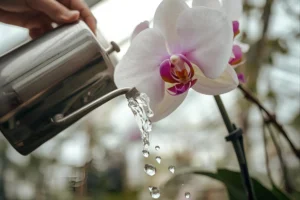
Instead, use room temperature water and employ the “soak and dry” method. Water thoroughly until water runs freely through drainage holes, then allow the growing medium to approach dryness before watering again.
Timing varies by species:
- Phalaenopsis: Water when bark pieces feel dry but not completely desiccated (typically 7-10 days)
- Cattleya: Allow to dry more completely between waterings (10-14 days)
- Oncidium: Water when pseudobulbs show slight wrinkling (7-12 days)
Proper Drainage Systems
Orchid pots must provide excellent drainage—waterlogged roots are the leading cause of orchid death. Use pots with multiple drainage holes or specialized orchid pots with side ventilation slots.
Effective drainage indicators:
- Water flows freely through all drainage points within 10-15 seconds
- Growing medium never remains soggy for more than a few hours
- No standing water accumulates in outer decorative containers
Signs of Over and Under-watering
Overwatering symptoms include yellow leaves starting from the bottom, soft brown roots, and a musty smell from the growing medium. Healthy orchid roots should be firm and green when wet, silvery when dry.
Underwatering signs include wrinkled pseudobulbs, yellowing leaves that feel papery, and roots that appear shriveled. However, distinguish between natural aging (older leaves naturally yellow and drop) and stress-related issues.
Choosing the Right Growing Medium
The growing medium serves as both anchor and moisture reservoir while providing the excellent drainage that orchid roots require.
Bark-based Mixes for Epiphytes
Premium fir bark forms the foundation of most successful orchid mixes. Research from the Royal Horticultural Society confirms that bark pieces sized between ½ to ¾ inch provide optimal air space while retaining appropriate moisture levels.
Effective bark mix components:
- 50-60% fir bark (medium grade)
- 20-30% sphagnum moss (adds moisture retention)
- 10-15% perlite or pumice (improves drainage)
- 5-10% coconut husk chips (sustainable bark alternative)
Alternative Substrates and Their Benefits
Semi-hydroponic growing using expanded clay pellets (LECA) has gained popularity among experienced growers. This method provides consistent moisture levels while eliminating traditional overwatering risks.
Moss-only growing works well for Phalaenopsis orchids in dry climates but requires careful monitoring to prevent waterlogging. Use high-quality New Zealand sphagnum moss and ensure containers provide adequate drainage.
When and How to Repot
Repot orchids every 18-24 months or when the growing medium begins breaking down into small particles that impede drainage. Fresh bark mix provides better air circulation and reduces the risk of root rot.
Repotting indicators:
- Growing medium has decomposed into small, soil-like particles
- Roots are growing extensively outside the pot
- Plant has outgrown its current container
- Persistent watering or drainage issues despite proper technique
Repotting process:
- Remove all old growing medium from roots
- Trim any brown, mushy roots with sterile scissors
- Select a pot only slightly larger than the root mass
- Position the plant so the newest growth faces the center of the pot
- Add growing medium gradually, ensuring roots have good contact
Essential Care Practices for Healthy Growth
Consistent care practices create the stable environment orchids need for long-term health and regular blooming cycles.
Fertilizing Schedule and Techniques
Orchids require dilute, regular fertilization rather than strong, infrequent feeding. Use a balanced orchid fertilizer (20-20-20 or similar) at ¼ strength weekly during growing seasons.
Fertilizing guidelines:
- Growing season (spring/summer): Weekly feeding with balanced fertilizer
- Rest period (fall/winter): Monthly feeding or complete fertilizer break
- Blooming orchids: Reduce fertilizer frequency to prevent shortened bloom life
Research from the University of Florida’s Orchid Research Program shows that consistent, weak fertilization produces healthier plants with more robust blooming than periodic strong feeding.
Pruning and Maintenance Tips
Dead flower spike removal encourages energy redirection toward new growth. Cut Phalaenopsis spikes just above a visible node if you want potential secondary blooming, or cut to the base for stronger vegetative growth.
Leaf maintenance involves removing yellowed or damaged foliage with sterile cutting tools. Always cut back to healthy tissue and allow cut surfaces to dry before watering.
Crown cleaning prevents water accumulation in the center growth area where new leaves emerge. Use cotton swabs to absorb moisture after watering, especially in Phalaenopsis orchids prone to crown rot.
Common Pest Prevention
Scale insects and mealybugs represent the most common orchid pests. Weekly inspection during watering sessions allows early detection and treatment.
Prevention strategies:
- Quarantine new plants for 30 days before introducing to collections
- Maintain proper air circulation to discourage pest establishment
- Remove dead plant material promptly to eliminate breeding sites
Treatment options include insecticidal soap, neem oil, or isopropyl alcohol applied with cotton swabs for localized infestations.
Troubleshooting Common Growing Problems
Even experienced growers encounter challenges, but understanding common issues helps maintain healthy orchid collections.
Addressing Root Rot Issues
Root rot prevention focuses on proper watering techniques and appropriate growing media. However, if rot occurs, immediate action can often save affected plants.
Treatment protocol:
- Remove plant from growing medium immediately
- Rinse roots thoroughly with lukewarm water
- Cut away all soft, brown, or mushy roots with sterile tools
- Treat remaining healthy roots with hydrogen peroxide solution (3% diluted 1:1 with water)
- Allow roots to dry for 24 hours before repotting in fresh medium
- Reduce watering frequency until new root growth appears
Encouraging Blooming Cycles
Temperature differential triggers blooming in most orchid species. Provide night temperatures 10-15°F cooler than day temperatures for 4-6 weeks to initiate spike development.
Other blooming factors:
- Adequate light exposure during growing season
- Proper fertilization leading up to blooming period
- Slight drought stress (allowing media to dry more completely)
- Avoiding repotting during spike development
Phalaenopsis orchids typically bloom once annually, while Cattleya species may bloom twice yearly with proper care.
Recovery Strategies for Stressed Plants
Stressed orchids require patience and consistent care rather than dramatic interventions. Focus on providing stable conditions while the plant recovers.
Recovery approach:
- Move to bright, indirect light location
- Reduce watering frequency slightly
- Suspend fertilization until new growth appears
- Maintain consistent temperature and humidity
- Avoid repotting unless absolutely necessary
Recovery timeframes vary significantly—some orchids show improvement within weeks, while others may require several months to fully recover.
Conclusion
Successful orchid growing centers on understanding these plants’ unique epiphytic nature and providing conditions that mimic their natural environment. The key principles—proper light exposure, appropriate watering techniques, well-draining growing media, and consistent care—work together to create thriving orchid collections.
Remember that orchid growing involves continuous learning and observation. Each plant develops its own patterns and preferences within these general guidelines. Start with these proven techniques, observe your plants carefully, and adjust your approach based on their responses.
With patience and proper care, your orchids will reward you with healthy growth and spectacular blooming displays for years to come. The investment in learning proper orchid care pays dividends in long-term plant health and the satisfaction of successfully cultivating these remarkable plants.
Frequently Asked Questions
How often should I water my orchid?
Water when the growing medium approaches dryness but isn’t completely dry. This typically occurs every 7-10 days for Phalaenopsis orchids, but varies based on environmental conditions, pot size, and growing medium.
Why are my orchid’s leaves turning yellow?
Natural aging causes lower leaves to yellow and drop annually. However, multiple yellowing leaves often indicate overwatering, insufficient light, or root problems requiring immediate attention.
Can I grow orchids in regular potting soil?
Never use regular potting soil for orchids. These epiphytic plants require specialized bark-based mixes that provide excellent drainage and air circulation around roots.
How long do orchid blooms typically last?
Phalaenopsis blooms can last 2-4 months with proper care, while Cattleya flowers typically persist 2-6 weeks. Avoid moving blooming plants and maintain consistent environmental conditions to maximize bloom duration.
When should I repot my orchid?
Repot every 18-24 months when the growing medium decomposes into small particles, when roots outgrow the container, or when persistent drainage issues develop despite proper watering technique.